LIVING RUINS
A distributed open-air museum
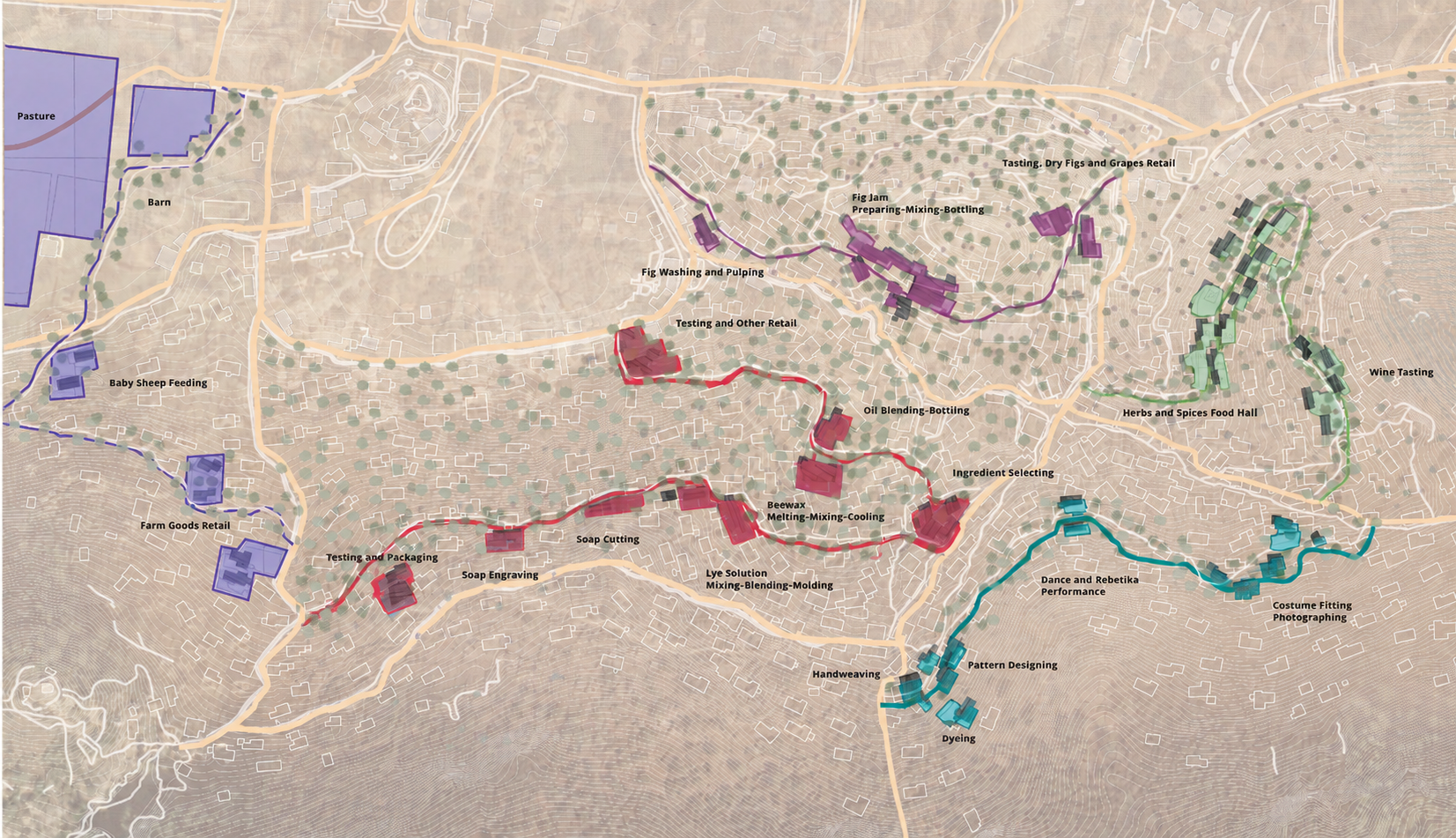
Kayaköy is reimagined through five historic traditions of local production — figs, olives, livestock, textiles, and herbs and spices. Rather than reconstructing the abandoned village, a series of lightweight interventions reconnects its ruins through making, gathering and movement.
Five colour-coded itineraries distribute production, interpretation and public experience across the village. Existing paths, topography and ruin condition shape where each programme is placed.
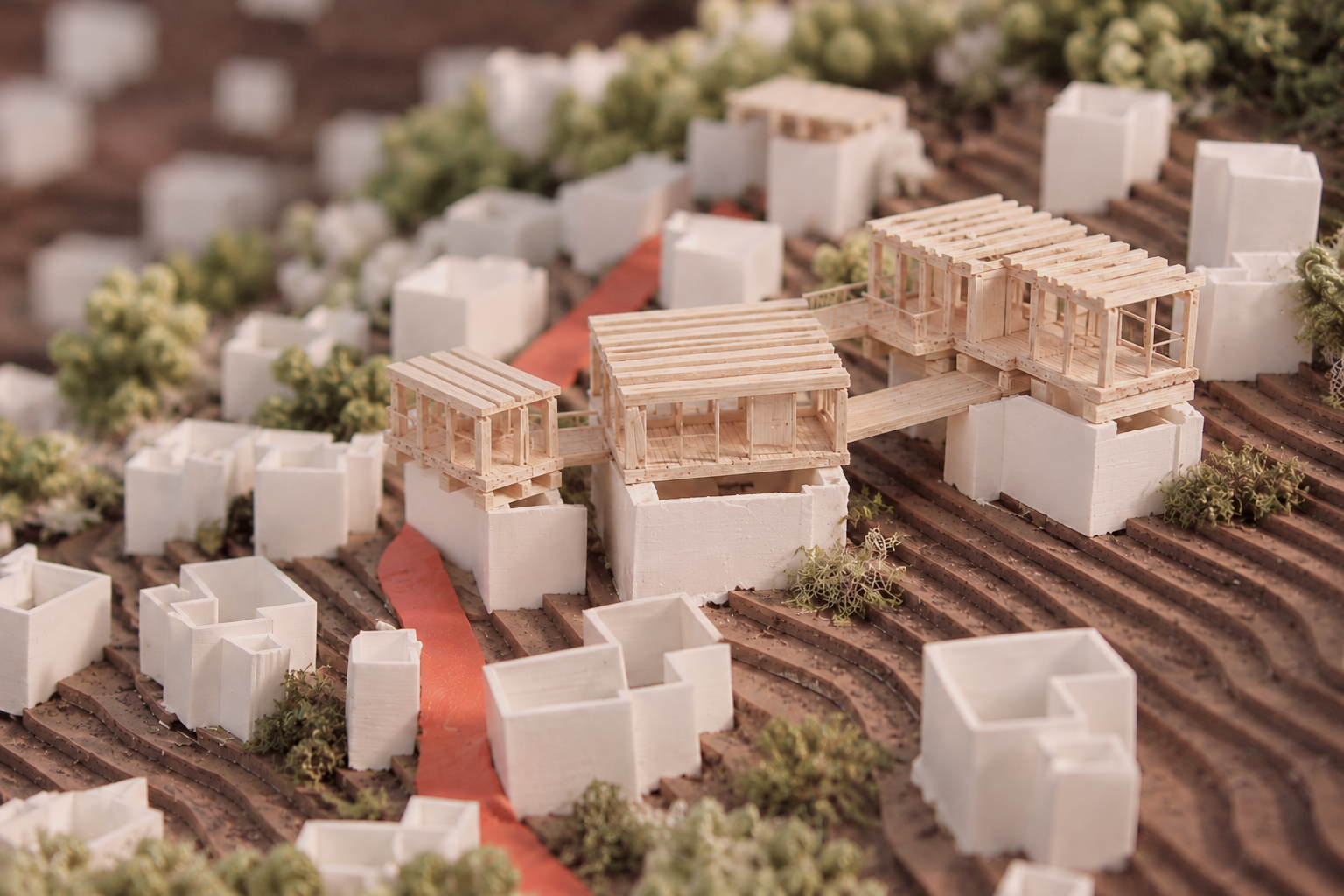
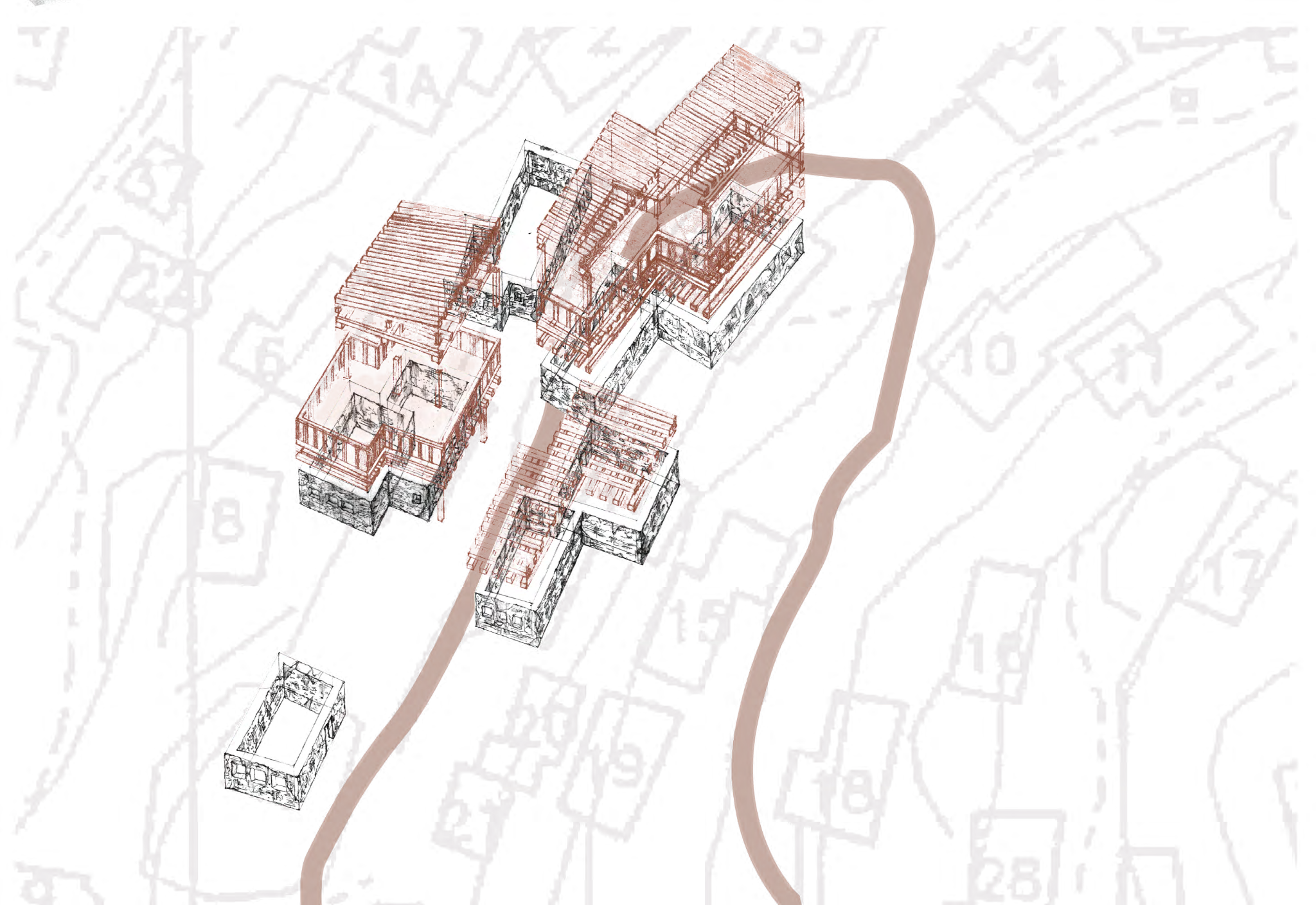
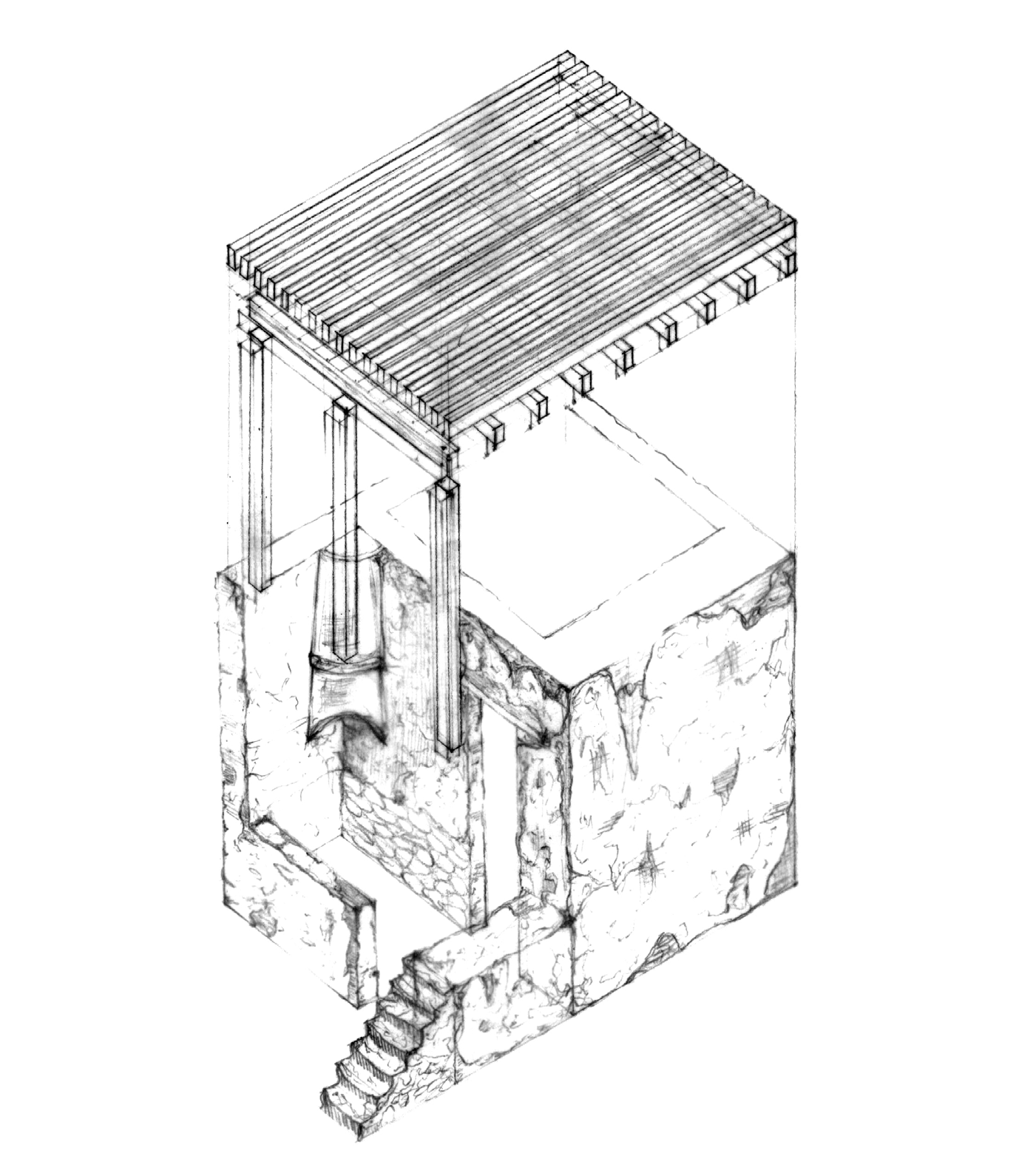
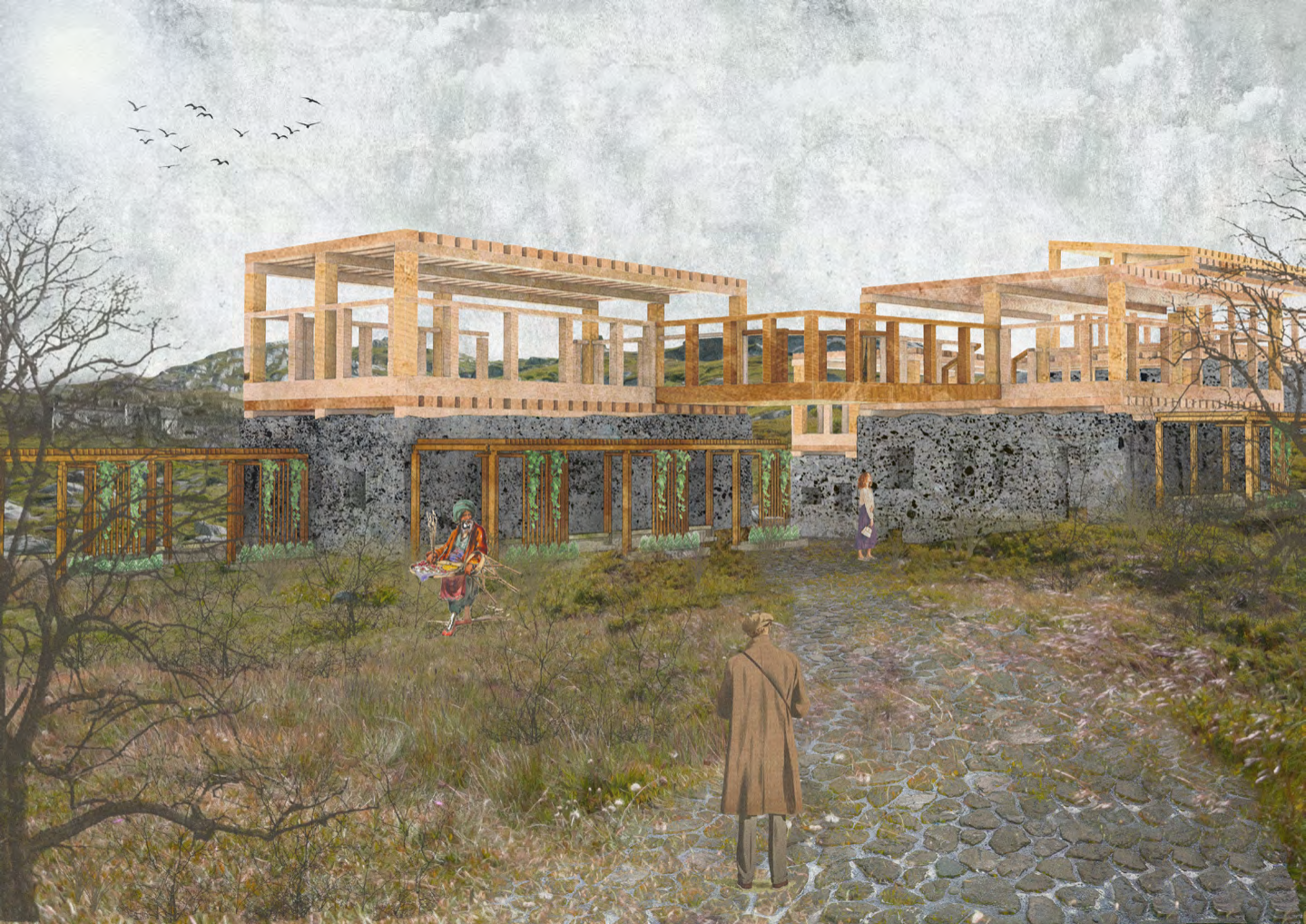
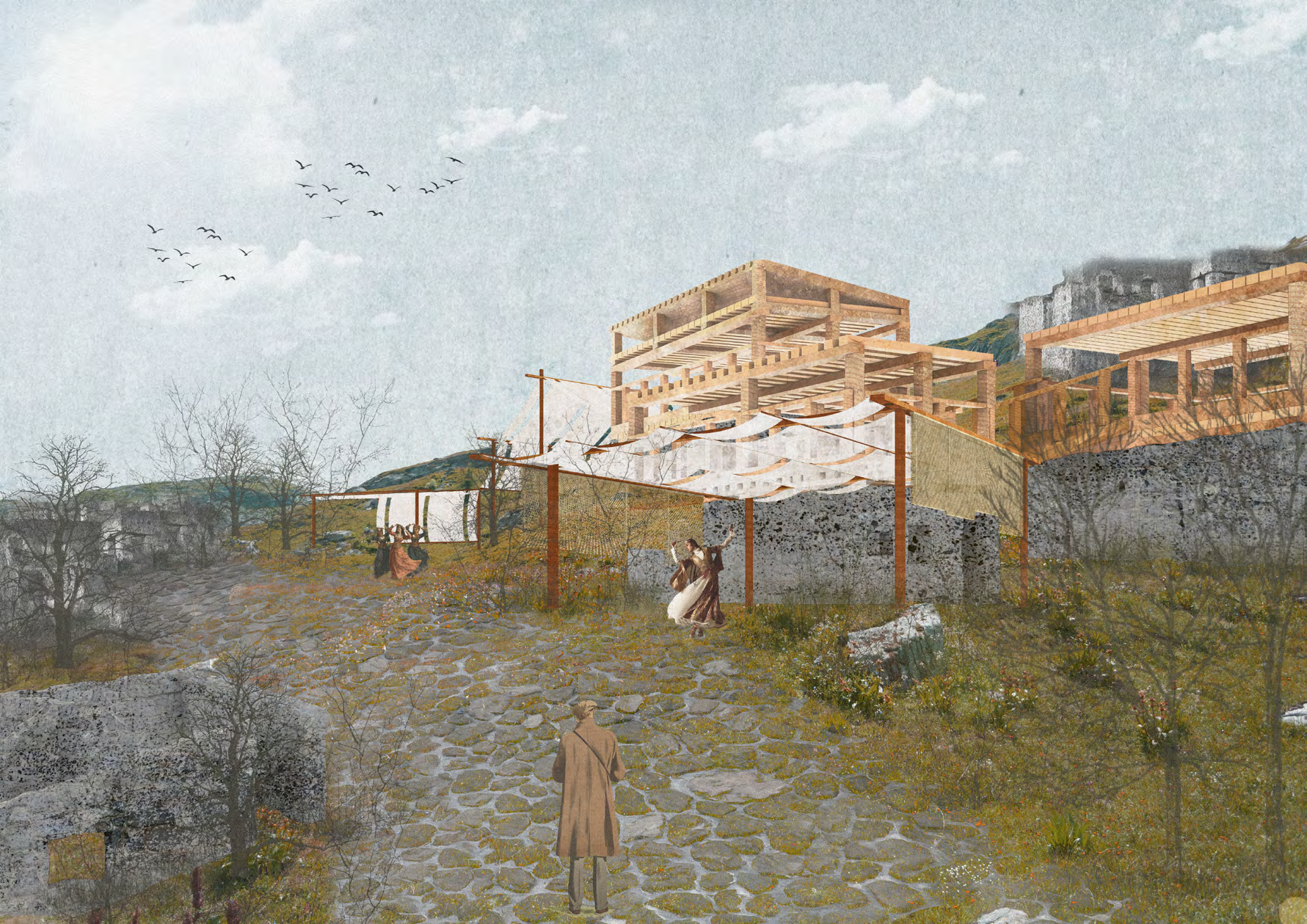
New timber structures occupy and connect selected ruins without attempting to complete them. The intervention creates moments of orientation, gathering and storytelling while keeping the fragmented village legible.
The museum is experienced through occupation rather than as a sequence of isolated objects: visitors move through workshops, shared rooms, thresholds and outdoor routes embedded in the abandoned fabric.
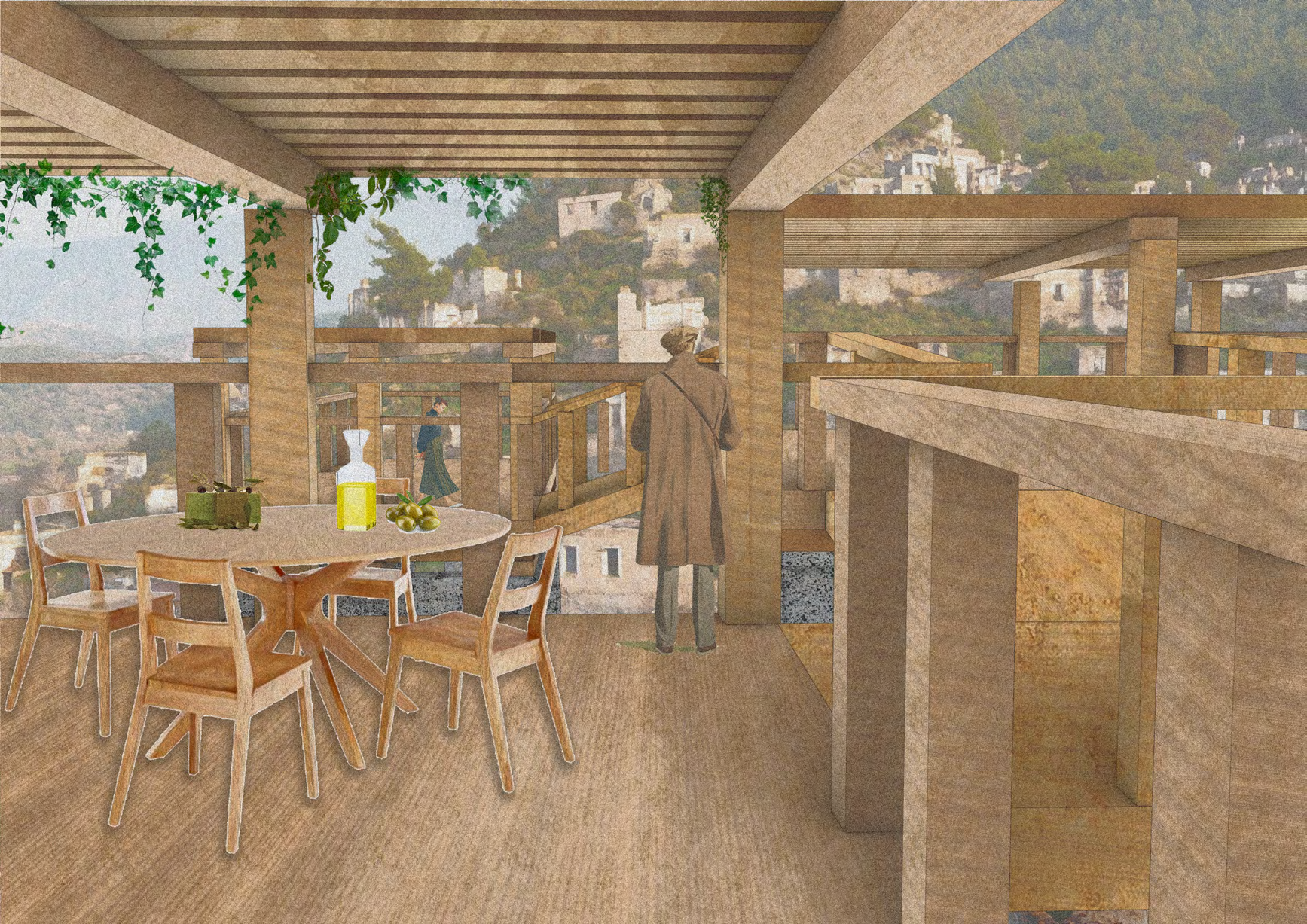
A continuous section follows the intervention across the terrain, showing how new rooms, retained rubble walls and circulation occupy different levels of the hillside.
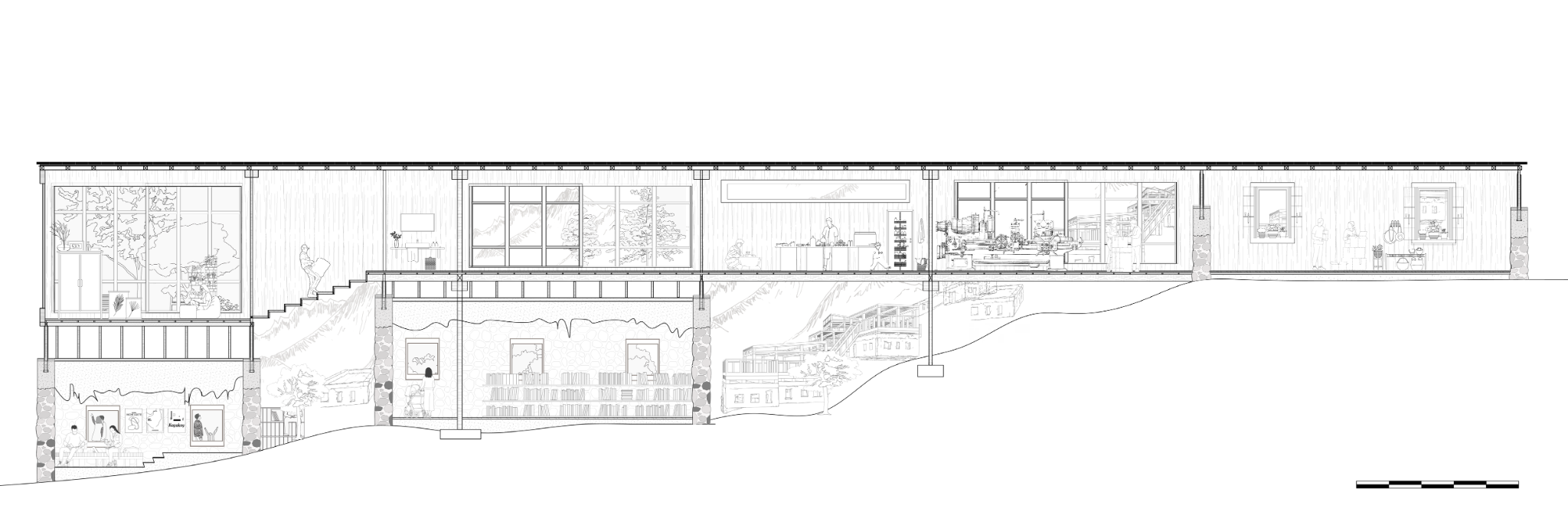
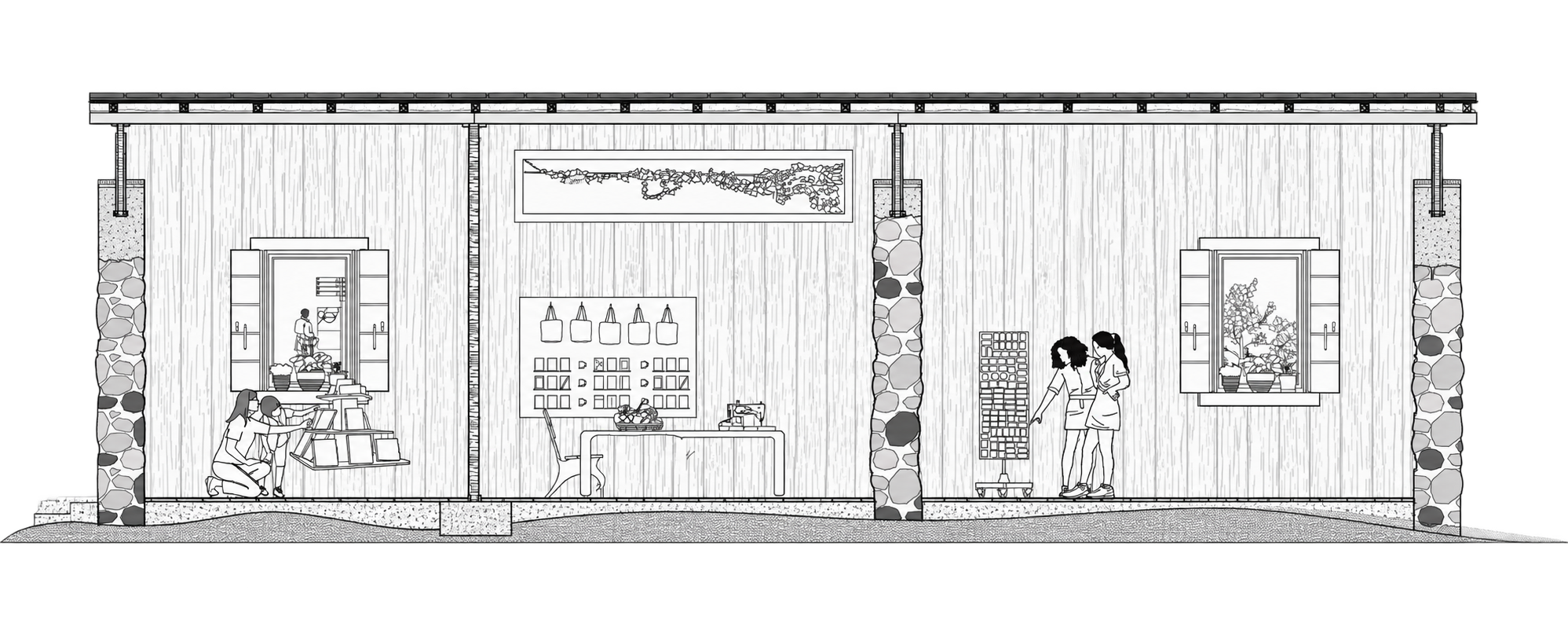
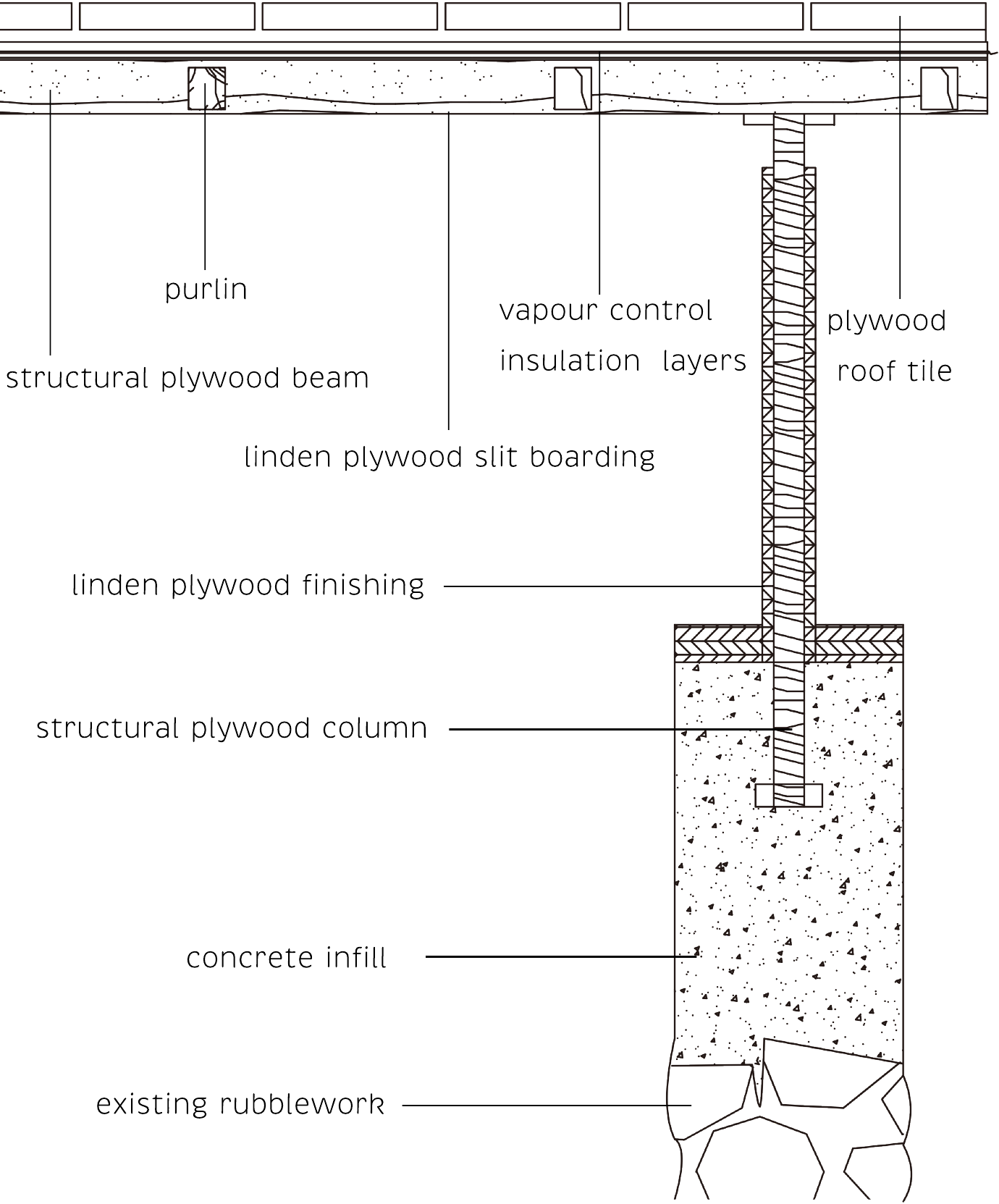
The architectural language is deliberately legible as new: a lightweight plywood frame is supported independently where possible and meets irregular rubblework through controlled concrete infill and carefully resolved junctions.